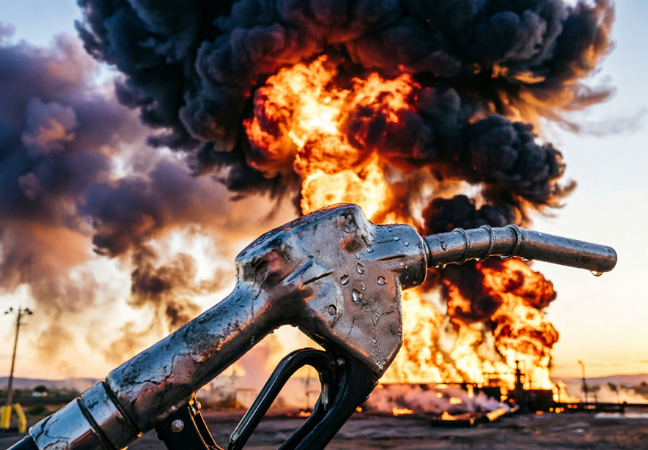
When missiles fly over the skies of the Middle East, prices surge at your local petrol pump. This is how that happens — and what the world is doing about it.
You wake up in the morning, open your phone, and check the news, and somewhere far away, a conflict has escalated. By evening, the petrol station near your home has quietly raised the petrol price on the board. You didn’t vote for the war. You have nothing to do with oil fields. Yet somehow, you’re paying for it. Sound familiar? That’s the uncomfortable reality of how interconnected our global energy and trade system is.
This article breaks down the full picture—how war affects your pocket, daily needs, fuel prices worldwide, which countries are suffering most, why some nations (like India) are better shielded, how people are cutting fuel costs, and whether electric vehicles are the real long-term answer. Let’s get into it.
The Chain Reaction: From War to Your Fuel Bill

The majority of people are unaware that crude oil is a signal as well as a commodity. Global merchants begin pricing in fear as soon as a conflict arises close to a significant oil-producing region. Not what has truly occurred thus far. What could occur?
Brent crude increased from about USD 70 per barrel to USD 85 in just one week after the United States and Israel began attacking Iran in late February 2026. The 15% price increase in just seven days was caused by traders’ worry that the Strait of Hormuz would be shut rather than a reduction in the oil supply. That tiny river is used for about 20% of the world’s oil commerce. You have a crisis if you block it. The markets moved strongly only because of the threat.
“Crude oil markets don’t wait for actual shortages. They price in fear weeks before any real disruption hits a pipeline.”
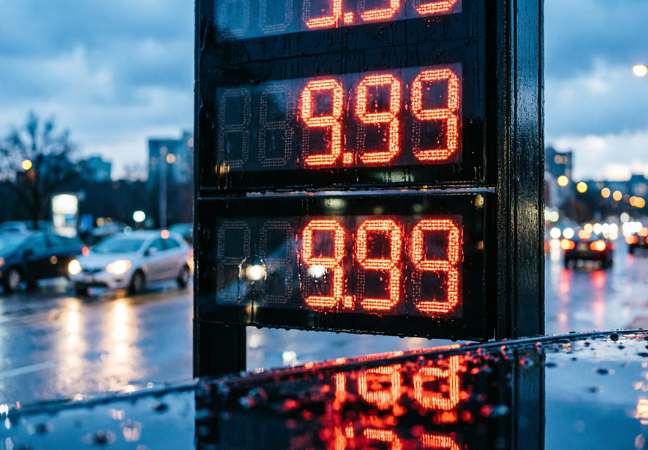
This fear-mongering quickly spreads. Crude is more expensive for refineries. Rates are raised by fuel producers. Margins are added by distributors. Taxes, transportation expenses, and profit margins at every turn add to the rise by the time it gets to your petrol pump. For regular customers, a USD 15 increase in oil can easily translate into a 10%–20% increase at the pump.
- +12p: UK petrol rise in 3 weeks (March 2026)
- +25p: UK diesel spike in the same period
- +3%: Ireland’s pump prices are the highest in the EU
- 26%: EU crude supplied by OPEC nations

Europe: Paying the Highest Price
Among the countries most vulnerable to oil shocks from the Middle East are those in Europe. About 25% of the EU’s crude comes from OPEC countries, and since pump prices already include hefty base taxes, every increase in crude costs has a significant impact on consumers. In March 2026, the UK, Germany, and Ireland witnessed some of the biggest gains. A 15% increase in crude oil can raise the final pump price by an additional 8–10% when excise costs are already EUR 0.45 per litre.
Pakistan and South Asia: A Currency Problem Too
A double blow is dealt to nations like Pakistan. Not only does the price of crude increase, but imports become considerably more expensive due to the fact that oil is traded in US dollars. Taxes and import expenses have put pressure on Pakistan’s petrol prices. There is very little fiscal space to absorb the blow of an increase in global crude prices without passing it on to consumers.
The US: Cushioned but Not Immune
Due in part to domestic oil supply, cheaper fuel taxes, and effective refining infrastructure, Americans pay some of the lowest fuel prices among industrialised economies. However, the United States is not exempt. American pump prices will eventually rise due to a protracted Middle East conflict that jeopardises global supply chains, particularly for diesel, which powers the majority of commercial transportation.
Why India Is a Special Case
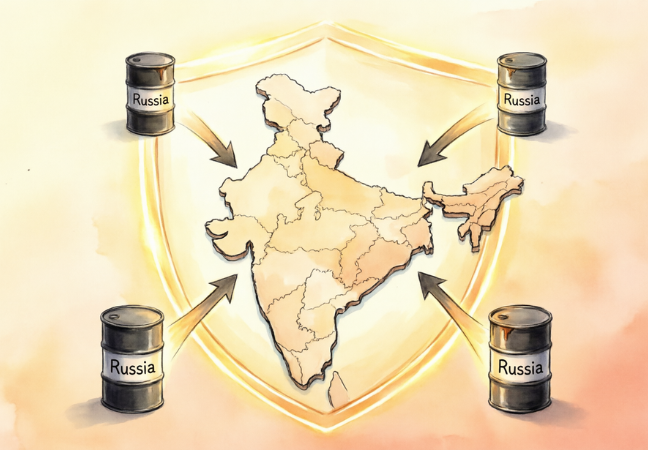
If you’ve been watching Indian petrol prices and wondering why they haven’t spiked the way Europe’s have, there are three real reasons, and they’re worth understanding.
- Discounted Russian oil: India became a significant importer of drastically reduced Russian petroleum when Western sanctions were imposed on Russia in 2022. This inexpensive oil is processed by refineries in India and turned into fuel, protecting domestic prices from surges in the Middle Eastern supplies on the spot market.
- Government-regulated pricing: Unlike a free market, India’s state-owned oil corporations, IOC, BPCL, and HPCL, do not often modify their rates. The timing and magnitude of price changes are governed by the government. This protects customers from sudden shocks, but it also causes price adjustments to be postponed and occasionally politically timed.
- Strategic petroleum reserves: Before market prices fully translate to the pump, the government has breathing room thanks to India’s crude oil stockpiles, which may cover several days’ worth of usage.
This doesn’t mean India is permanently protected—a prolonged conflict that cuts the Russian oil supply or closes the Strait of Hormuz would eventually force a price revision. But for now, India’s energy strategy is proving smarter than it looks from the outside.
How People Are Cutting Their Fuel Costs Right Now
When pump prices rise, people adapt. Some changes are short-term behaviour shifts. Others are long-term investments. Here’s what’s actually working:
- Drive more intelligently, not less: Fuel economy can be lowered by up to 30% by aggressive acceleration and forceful braking. Stretching every litre further may be done for free by keeping tyres properly inflated, eliminating needless idling, and maintaining constant speeds. It may seem apparent, but most drivers just don’t do it regularly.
- Carpooling is quietly returning: During the price increase in March 2026, commuter carpooling applications saw notable increases in traffic in the UK and Germany. A 25% price rise is adequately offset by splitting the fuel expenditure four ways. It works, but it’s not glamorous.
- Apps for fuel prices and loyalty programs: The cost of gasoline might differ by 5–8 pence per litre between stations on the same street. You can identify the most affordable local option in real time with apps like GasBuddy (US) and Petrol Prices (UK). This can result in significant savings over the course of a month of frequent driving, particularly for diesel users.
Is This the Moment EVs Finally Win?
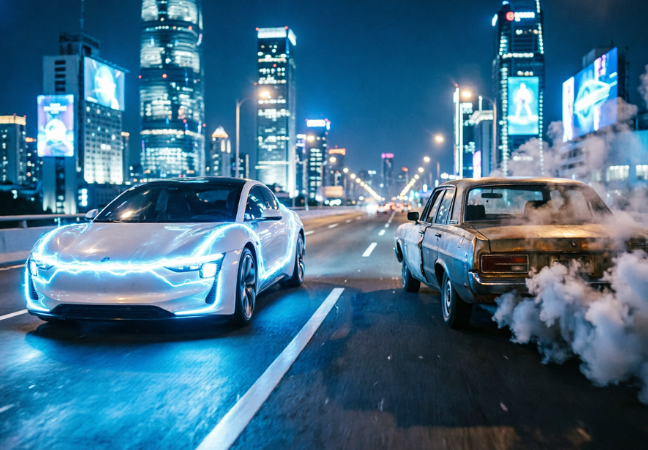
The question of whether this is the tipping moment for electric vehicles is raised by every increase in fuel prices. The truth is that while we are making progress, the majority of the world is still far away.
EV usage is rapidly increasing in China and Europe. The economics of EVs are immediately improved by fuel price shocks, particularly for high-mileage urban drivers. At the present electricity rates, a driver in the UK who travels 15,000 km yearly might save more than £1,500 by switching from petrol to electric.
“Every petrol price spike is a free marketing campaign for electric vehicles. The question is whether the charging infrastructure can keep up with the sudden surge in interest.”
But the barriers are real. Upfront purchase costs remain high in developing markets. Charging infrastructure is patchy outside major cities. And in countries with unreliable electricity grids, an EV is still a hard sell. The transition is real — but it will be uneven across geographies for at least another decade.
The Final Score
There has always been an economic cost to war that goes well beyond the front lines. Every kitchen table, every commuter, and every delivery driver is affected financially within weeks when a battle breaks out close to the world’s oil arteries. The nations that created reserves, diversified their energy sources, or had the political will to control prices through governmental procedures are the ones that are most protected.
The answer is becoming more obvious for individual consumers: drive more efficiently, look into other options, and, if the economics are right, make long-term bets on EVs. While the era of stable, affordable gasoline may not be dead, it is undoubtedly becoming less dependable. Perhaps it is the long-overdue wake-up call for energy policy.
You can also read our detailed guide on this topic: Six AI companies to watch—and how their innovations could replace your smartphone
According to reliable sources, this topic has been widely researched: https://www.eia.gov/todayinenergy/detail.php?id=66764
3 thoughts on “Why Wars Make You Pay More at the Fuel Pump — And What You Can Do About It”