I’ll be genuine with you; I wasn’t planning to write about climate today.
But then I watched those videos from Karnataka. Roads covered in snowballs. People standing in the street, touching downpours as they’d never seen anything like it. And the thing is—most of them likely hadn’t.
That’s when I pay attention. Okay, something is thoughtfully off this year.
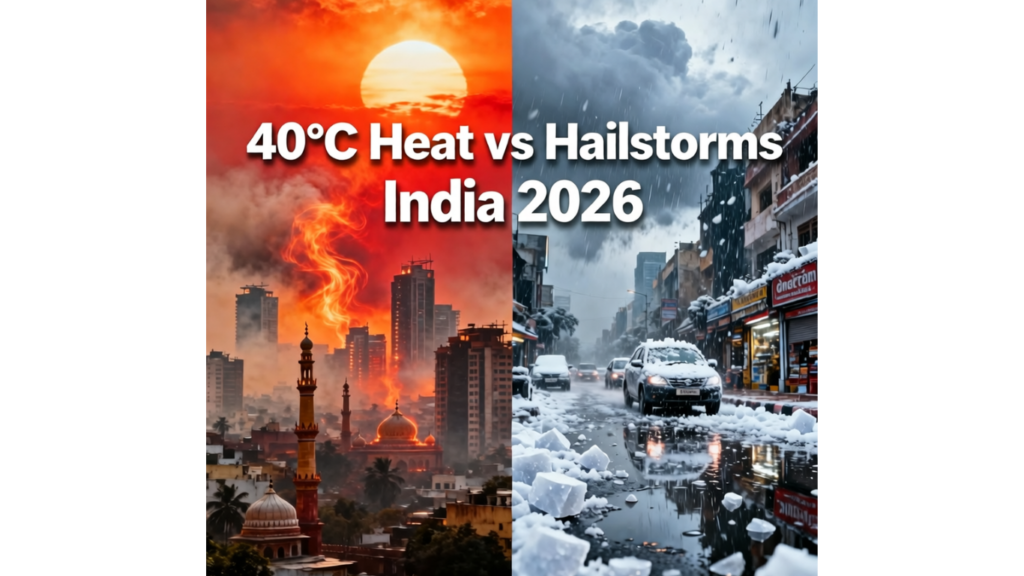
India is experiencing some of the most exceptional environmental conditions in recent years, with high temperatures affecting major cities while unexpected rainstorms and cloudbursts impact different cities simultaneously. The unexpected change in the environment influenced concern across the country, as specialists warn that patterns can cause climate change.
Rainstorms Create a Snow-Like Scene in India

The staggering part is that a few areas are experiencing hot weather, and some are experiencing rare environmental conditions.
A snow-like downpour recently impacted parts of Karnataka, blanketing the whole area in white. This is a rare occurrence.
On social media, videos went viral. People were in doubt. This event is usually compared to northern states.
For the people, it was a mix of surprise and worry. There is a rare downpour and extreme heatwave in one part of India.
India Meteorological Department Releases Countrywide Warnings
The IMD has issued warnings for winds, intense downpours, and lightning across multiple states.
Their guidance is straightforward: stay informed, take precautions, and don’t step out unnecessarily during sudden weather changes.
These announcements are particularly crucial for farmers, power services, and residents in high-risk areas because sudden storms can damage crops and power services.
Why These Warnings Matter More Than Ever
Weather alerts are not uncommon, but experts believe the current situation is more serious due to the increasing frequency and intensity of such events. Sudden storms are becoming more unpredictable, leaving very little time for preparation.
For people living in urban areas, strong winds can lead to falling trees, damaged vehicles, and traffic disruptions. In rural regions, the impact can be even more severe, especially for farmers whose crops are vulnerable to unseasonal rain and hail.
Lightning strikes, in particular, remain one of the leading causes of weather-related casualties in India. This makes it essential for people to take warnings seriously and avoid open spaces during storms.
High-temperature Punches Early Across Major Cities
Every year, we mentally prepare ourselves for the brutal Indian summer. We stock up on nimbu paani, we dig out the old cooler from the store room, and we make our peace with sweating through everything.
Cities like Delhi, Mumbai, and Ahmedabad have already touched temperatures above 40°C.
According to the latest reports, the early rise in climate has alarmed meteorologists, who claim the traditional spring season is slowly vanishing.
The atypical heat is not only uncomfortable—it can also present major health risks. Cases of heat fatigue, dehydration, and heatstroke are predicted to increase if temperatures keep rising at this rate.
Specialists claim that insufficient cold-season cloudbursts and lengthy climate fluctuations are factors behind this sudden temperature increase.
What’s Causing These Extreme Weather Swings?
Weather professionals point to a mix of factors behind this unusual environment.
One of the biggest causes is atmospheric conditions changing, which is disturbing traditional weather cycles and making seasonal patterns less predictable.
India is not the only nation experiencing these difficulties; similar severe weather occurrences are being recorded globally. Nonetheless, the extent and severity of transformations in India are especially alarming because of its vast population and reliance on farming.
Another element is the changing behavior of global climate systems, which are no longer following predictable patterns. This results in sudden temperature spikes, unexpected rainfall, and unusual storms.
How This Is Already Affecting Daily Life
This isn’t just something happening “out there.” It’s hitting home in very real ways:
- Farming: Unexpected rainfall and hailstorms are harming crop yield.
- Electricity: As temperatures rise, power demand increases gradually, leading to longer cuts in areas.
- Travel: Sudden rainfall and climate change cause transport delays.
- Health: More people are being treated for heat-related illness earlier in the year than ever before.
For crores of Indians, this isn’t a news story—it’s their daily reality.
What to Predict Next
Experts aren’t painting a pretty picture.
India is predicted to face a hotter-than-normal summer this year, with more periodic and intense heat waves. At the same time, unpredictable storms and unexpected rainfall are likely to continue.
What Can You Do?
- Keep the IMD app or website bookmarked.
- Check weather updates before moving out.
- If you’re a farmer, keep in touch with your local agriculture department.
- Please drink water and avoid going out unnecessarily.
We can’t control the weather. But we can stay prepared.
Final Word
India is living through a climate reality that would have seemed incredible just a decade ago. 40°C hotness in March. Snow-like downpours in Karnataka. Both are happening at the same time. This is what environmental change actually looks like—not just in documentaries, but right outside our windows.
Stay informed. Stay safe. And maybe keep that nimbu paani ready. You’re going to need it this summer.
You can also read our detailed guide on this topic: Why Wars Make You Pay More at the Fuel Pump — And What You Can Do About It
According to reliable sources, this topic has been widely researched: Link