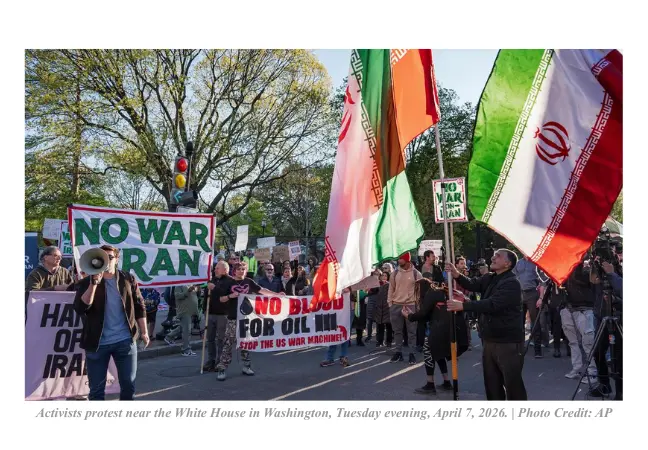
 A civilisation was threatened, an oil island bombed, and human chains formed across Iranian cities — and then, with hours to spare, the shooting stopped. Here’s what really happened in those crucial 24 hours before the US–Iran ceasefire.
When the world held its breath
The majority of ceasefires are declared in boardrooms. Hours after US missiles hit one of the most significant oil centers in the world, this one appeared on Truth Social. There were fireballs above the Persian Gulf, predictions of civilizational collapse, the destruction of a synagogue in Tehran, and an unexpected phone call to Netanyahu along the way to the US-Iran peace.
You must comprehend the 24 hours that preceded the ceasefire in order to truly comprehend its meaning, because the diplomatic language that followed tells a totally different narrative than those hours.
Timeline: 24 hours before the guns went quiet
- Monday — Airstrikes intensify: US and Israeli missiles hit Iran’s South Pars gas field, which is shared with Qatar and is the world’s biggest natural gas source. Iran responded against the Gulf oil infrastructure and the US military headquarters in Jordan. Israel attacked dozens of military facilities, missile launch sites, and three significant Iranian airports at the same time.
- Monday night: effects on civilians: A senior military officer in central Tehran was the target of an Israeli strike that missed its objective and damaged the Rafi-Nia Synagogue, a significant civilian landmark. The event stunned onlookers across the world.
- Tuesday morning: a strike to the infrastructure:
The Israeli military acknowledged that it had damaged many railway lines in Tehran, Karaj, and Tabriz, as well as portions of eight Iranian bridges. Two civilians were murdered near a railway bridge in Kashan, according to Iranian reports. - Kharg Island was blasted twelve hours before the deadline: Iran was granted a 48-hour window by Trump to reopen the Strait of Hormuz. The US struck Iran’s primary oil export center, Kharg Island, with half of that time remaining. It was impossible to misinterpret the message.
- Tuesday — ceasefire proclaimed: Trump shared the ceasefire on Truth Social, giving gratitude to Field Marshal Asim Munir and Pakistani Prime Minister Shehbaz Sharif. It was confirmed by Abbas Araghchi, Iran’s Foreign Minister. The US interlocutor was JD Vance. The guns stopped firing, at least on the American side.
The Kharg Island strike: why it mattered
It’s not just any target, Kharg Island. The great majority of Iran’s crude oil exports are handled by it. It was a direct hit to Iran’s economic lifeblood, not a warning. Consider it similar to bombing a city’s sole export-oriented route. Everything comes to a halt.
The timing was intentional. Iran was given till 8 p.m. ET by Trump to reopen the Strait of Hormuz. The United States took action twelve hours ahead of schedule rather than waiting for the deadline. It was the type of action intended to destroy Iran’s last chance to make a bluff.
About 20% of the world’s oil travels via the Strait of Hormuz, a small river that connects Iran and Oman. Iran had threatened to close it, which would very instantly cause a worldwide energy catastrophe.
Trump’s “civilisation will die” moment
To put it plainly, the Truth Social post was amazing. A sitting US president declaring that “a whole civilization will die tonight” is the type of rhetoric that causes markets to plummet and freezes diplomats in their tracks. Whether it was strategy or instinct, the effect was the same — it made the stakes impossible to ignore.
Nancy Pelosi, the former speaker of the House, saw it as an indication of “instability” and suggested using the 25th Amendment. Only a few weeks into his pontificate, Pope Leo XIV denounced the threats as “unacceptable.” This was an uncommon area even by contemporary geopolitical standards.
Nevertheless, it was successful. Or at least there was a ceasefire after it. The outcome was the same: the violence stopped, regardless of whether the threat or the covert diplomacy brought about the peace.
Iran’s human chains — and what they reveal
Iran’s leadership urged youth to create human chains around possible US and Israeli targets, an antiquated and highly symbolic action, while missiles passed overhead. It was an appeal to place human corpses between structures and explosives.
Trump called it “totally illegal.” However, the symbolism reveals how Iran was internally portraying the fight as a national existential danger that required every citizen to respond, rather than as a military operation that it was winning.
For its part, the IRGC said that its “self-restraint is over” and threatened to shut off the region’s oil supplies for years through cyberwarfare. Additionally, it suggested that the Bab el-Mandeb Strait, another crucial chokepoint in international trade, would be blocked by Houthi supporters. Instead of absorbing the suffering, Iran was threatening to make it worse.
Pakistan’s unlikely role
Few experts predicted that Pakistan would mediate a cease-fire between the United States and Iran. And yet, here we are. The final framework was presented by Field Marshal Asim Munir and Prime Minister Shehbaz Sharif. The agreement stipulated:
- A two-week suspension of all military operations
- Reopening the Strait of Hormuz to foreign trade
- Diplomatic negotiations in Islamabad with the goal of a long-term peace agreement
Additionally, Trump stated that Iran has given him a 10-point plan, which he called a “workable basis” for negotiations. Although Iran’s authorities accepted the agreement, they were cautious to include caveats. Araghchi stated that Iran would only stop “defensive operations” if the US ceased its attacks first. Even more frankly, the Supreme National Security Council declared, “Our hands remain upon the trigger.”
Warm tranquility is not what this is. It’s a tearful pause.
The Netanyahu call nobody talked about
Before announcing the truce, Trump made a phone call to Israeli Prime Minister Benjamin Netanyahu, which is one detail that crept into the news cycle. This was confirmed to CBS News by a White House official. What does it mean? The ceasefire did not include Israel. Missile assaults were reported around the Gulf shortly after Trump’s declaration, and a US military official stated that Israel, not the US, was still carrying out the strikes.
Put differently, the United States hesitated. Israel didn’t. Rather than between Jerusalem and Tehran, the truce is between Washington and Tehran. In the next days and weeks, that distinction will be crucial.
What does the ceasefire actually mean?
In a situation this unstable, a two-week truce is only a respite, not a solution. There will be a brief reopening of the Strait of Hormuz. If negotiations start at all, they will start in Islamabad. Furthermore, there has been no public discussion of Iran’s nuclear program, which was the initial source of most of this animosity.
What we are aware of
- Israel has not stopped its strikes, but the US has.
- Iran has pledged to retaliate for any such assaults and maintains its deterrent posture.
- Pakistan has taken on a major diplomatic role in Middle East crises, something it has seldom done.
Both the global oil market and the Strait of Hormuz are still precarious.
Every conflict has its crucial twenty-four hours. In this one, the globe witnessed a president broadcast an apocalyptic warning on social media, a superpower bomb an oil island, civilians create human chains in Tehran’s streets, and a Pakistani general covertly assists in mediating what may turn out to be the most significant diplomatic deal of 2026. It’s another matter completely if it holds.
Also Read: The Helium Crisis That Could Cripple the Entire Chip Industry
We recommend checking this detailed guide for more clarity: Kharg attack, human chains, call to Netanyahu: The 24 eventful hours before US-Iran ceasefire